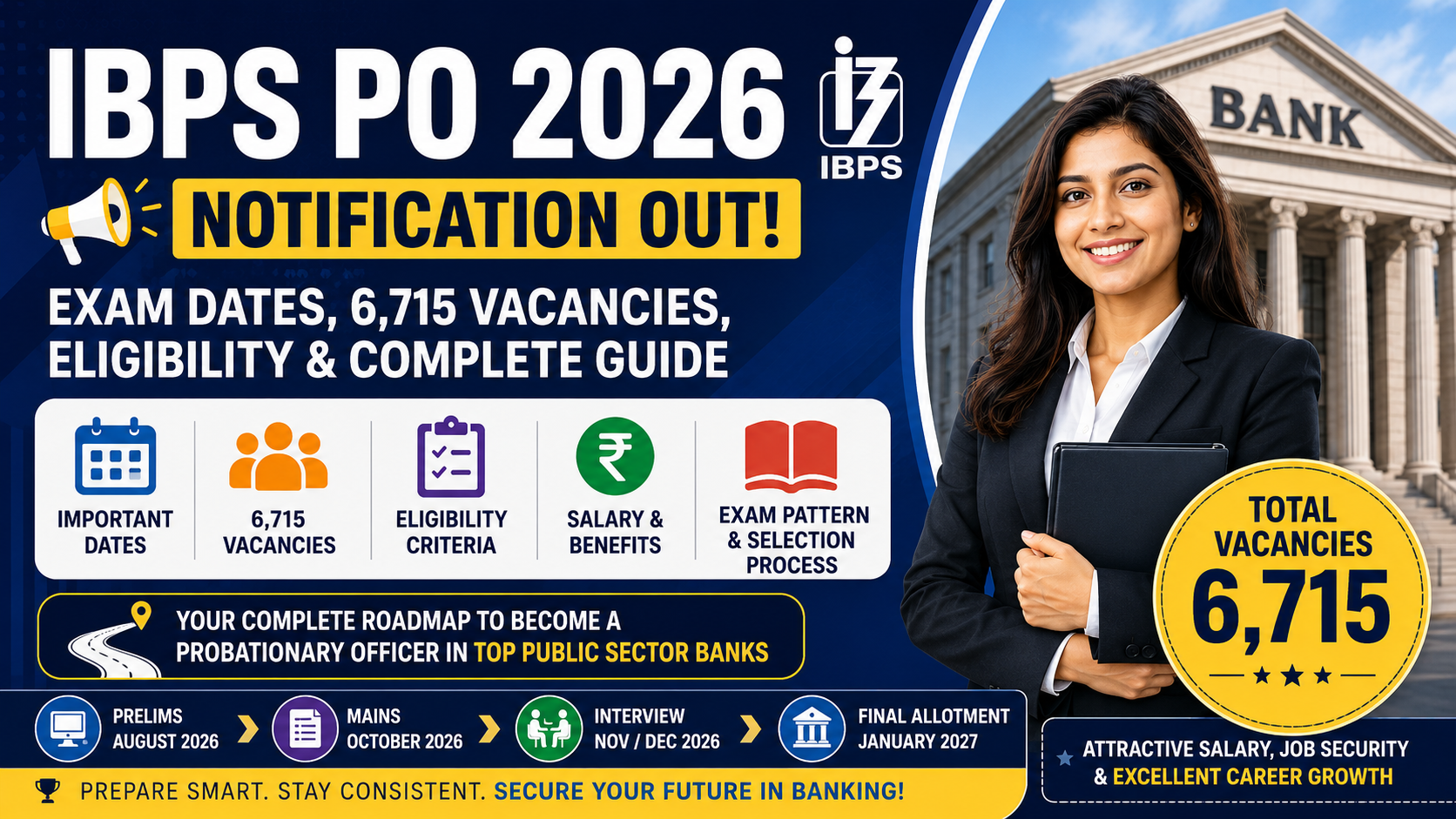
Preparing for the ESIC SSO exam can feel overwhelming, but a smart, focused practice makes a huge difference. That’s why I’ve compiled 100 ESIC SSO previous year MCQs from the last five years — all solved and ready for quick revision. These are the kind of questions that actually appear on the paper, so working through them will help you spot repeating patterns, common traps, and the topics examiners love to test.
Try doing these questions in one or two timed sessions to simulate the real exam, then go through the explanations to understand the shortcuts and reasoning. Whether you’re cramming before the final week or building steady momentum, this set will save time and boost confidence.
Code on Social Security 2020
Question 1
The Code on Social Security, 2020 amalgamates how many central labor laws relating to social security?
A) 7
B) 8
C) 9
D) 12
Correct Answer: C) 9 (ESIC SSO 2022)
Question 2
As per the Code on Social Security, 2020, “Gig workers” and “Platform workers” have been explicitly recognized for the first time. Contributions for schemes for these workers can be sourced from aggregators at a rate falling between:
A) 0.5% to 1% of their annual turnover
B) 1% to 2% of their annual turnover
C) 2% to 5% of their annual turnover
D) 5% to 10% of their annual turnover
Correct Answer: B) 1% to 2% of their annual turnover (UPSC EPFO APFC 2023)
Note: This contribution must not exceed 5% of the amount payable by an aggregator to gig and platform workers.
Question 3
Under the Code on Social Security 2020, what is the uniform definition ceiling for “Wages”? If the total of specific allowances/components exceeds what percentage of total remuneration, that excess amount will be added back to wages?
A) 30%
B) 40%
C) 50%
D) 60%
Correct Answer: C) 50% (UPSC EPFO EO/AO 2021)
Question 4
The Code on Social Security, 2020 mandates the establishment of a “National Social Security Board” for the welfare of which categories of workforce?
A) Organized Workers only
B) Unorganized workers, Gig workers, and Platform workers
C) Public Sector Undertaking employees only
D) Agricultural casual laborers only
Correct Answer: B) Unorganized workers, Gig workers, and Platform workers (ESIC SSO 2022)
Question 5
What is the minimum number of employees required in an establishment for the mandatory implementation of the Employees’ Provident Fund scheme under the Code on Social Security, 2020?
A) 10 or more employees
B) 15 or more employees
C) 20 or more employees
D) 50 or more employees
Correct Answer: C) 20 or more employees (UPSC EPFO EO/AO 2023)
Question 6
Under the Social Security Code 2020, an event of “employment injury” includes accidents happening to an employee while traveling to or from their place of work. This statement is:
A) True, it is statutorily presumed to arise out of and in the course of employment.
B) False, transit is excluded.
C) True, but only if transit is provided by the employer.
D) True, but only if the accident happens within 1 km of the factory.
Correct Answer: A) True, it is statutorily presumed to arise out of and in the course of employment. (ESIC SSO 2022)
Question 7
According to Chapter V (Gratuity) of the Code on Social Security 2020, the continuous service requirement of 5 years for eligibility of gratuity is reduced to 3 years for which class of employees?
A) Part-time employees
B) Working journalists
C) Contractual manual laborers
D) Seasonal industrial workers
Correct Answer: B) Working journalists (UPSC EPFO APFC 2023)
Question 8
What is the penalty limit for an employer who fails to pay the amount of contribution under the Code on Social Security, 2020, for the first offense?
A) Imprisonment up to 1 year or a fine up to ₹50,000, or both
B) Imprisonment up to 3 years or a fine up to ₹1,000,000, or both
C) Imprisonment up to 3 years and a fine of ₹100,000
D) Fine of ₹10,000 only
Correct Answer: B) Imprisonment up to 3 years or a fine up to ₹1,000,000, or both (ESIC SSO 2022)
Question 9
The Social Security Code, 2020 provides for “Compounding of Offences.” A first-time offense that does not involve imprisonment can be compounded at what rate?
A) 25% of the maximum fine
B) 50% of the maximum fine
C) 75% of the maximum fine
D) 100% of the maximum fine
Correct Answer: B) 50% of the maximum fine (UPSC EPFO EO/AO 2023)
Question 10
Which of the following funds will receive the money collected through the compounding of offenses under the Code on Social Security, 2020?
A) Consolidated Fund of India
B) Prime Minister’s National Relief Fund
C) Social Security Fund (for unorganized workers)
D) ESIC Corporate General Fund
Correct Answer: C) Social Security Fund (for unorganized workers) (ESIC SSO 2022)
Employees’ State Insurance (ESI) Act, 1948
Question 11
The Employees’ State Insurance Act was enacted in which year?
A) 1923
B) 1947
C) 1948
D) 1952
Correct Answer: C) 1948 (ESIC SSO 2018)
Question 12
What is the current standard monthly wage ceiling for an employee to be covered under the ESI Act, 1948?
A) ₹15,000
B) ₹18,000
C) ₹21,000
D) ₹25,000
Correct Answer: C) ₹21,000 (ESIC SSO 2018 / 2022)
Question 13
What is the monthly wage limit for coverage under the ESI Act for “Persons with Disabilities” (PwD)?
A) ₹21,000
B) ₹25,000
C) ₹30,000
D) ₹15,000
Correct Answer: B) ₹25,000 (ESIC SSO 2022)
Question 14
With effect from July 2019, the total rate of contribution under the ESI Act was reduced from 6.5% to 4%. What are the individual revised shares of Employer and Employee contributions?
A) Employer: 3.25%, Employee: 0.75%
B) Employer: 4.00%, Employee: 1.00%
C) Employer: 3.50%, Employee: 0.50%
D) Employer: 3.00%, Employee: 1.00%
Correct Answer: A) Employer: 3.25%, Employee: 0.75% (ESIC SSO 2022 / UPSC EPFO EO/AO 2021)
Question 15
Employees receiving less than or equal to a daily average wage of _ are exempted from paying their share of ESI contribution (though the employer must still pay their share).
A) ₹137
B) ₹176
C) ₹250
D) ₹300
Correct Answer: C) ₹250 (ESIC SSO 2022)
Question 16
Under the ESI Act, 1948, the “Contribution Period” and “Benefit Period” are split into how many months each?
A) 3 months
B) 6 months
C) 9 months
D) 12 months
Correct Answer: B) 6 months (ESIC SSO 2018)
Question 17
Which of the following is NOT a type of benefit provided under the ESI Act, 1948?
A) Sickness Benefit
B) Maternity Benefit
C) Retrenchment Benefit
D) Dependants’ Benefit
Correct Answer: C) Retrenchment Benefit (ESIC SSO 2018)
Note: Retrenchment benefits are covered under the Industrial Disputes Act, 1947.
Question 18
What is the maximum duration for which standard Sickness Benefit can be claimed in cash under the ESI Act during any two consecutive benefit periods?
A) 56 days
B) 91 days
C) 120 days
D) 180 days
Correct Answer: B) 91 days (ESIC SSO 2018)
Question 19
Under the ESI Act, 1948, what is the structure of the “Employees’ State Insurance Corporation” regarding its chairperson? Who acts as the ex-officio Chairman?
A) The Prime Minister of India
B) The Union Minister for Labour and Employment
C) The Director-General of ESIC
D) The Union Health Minister
Correct Answer: B) The Union Minister for Labour and Employment (ESIC SSO 2018)
Question 20
Who is appointed by the Central Government to act as the chief executive officer of the Employees’ State Insurance Corporation?
A) Financial Commissioner
B) Insurance Commissioner
C) Director General
D) Medical Commissioner
Correct Answer: C) Director General (ESIC SSO 2022)
Employees’ Provident Funds & Miscellaneous Provisions Act, 1952
Question 21
The Employees’ Provident Funds and Miscellaneous Provisions Act was enacted in which year?
A) 1948
B) 1952
C) 1961
D) 1972
Correct Answer: B) 1952 (UPSC EPFO EO/AO 2017)
Question 22
What is the current monthly statutory wage ceiling for mandatory contribution to the Employees’ Provident Fund (EPF) scheme?
A) ₹10,000
B) ₹12,000
C) ₹15,000
D) ₹21,000
Correct Answer: C) ₹15,000 (UPSC EPFO EO/AO 2021 / ESIC SSO 2022)
Question 23
Out of the 12% of the employer’s contribution to the EPF account, how much percentage is redirected into the Employees’ Pension Scheme (EPS), 1995?
A) 3.67%
B) 8.33%
C) 10%
D) 1.15%
Correct Answer: B) 8.33% (UPSC EPFO EO/AO 2017 / 2023)
Question 24
The Central Board of Trustees (CBT) administers the EPF schemes. Who appoints the Chairman of the Central Board of Trustees?
A) The Central Government
B) The State Governments by consensus
C) The Governor of RBI
D) The Chief Labour Commissioner
Correct Answer: A) The Central Government (UPSC EPFO EO/AO 2021)
Question 25
What is the full expansion of EDLI under the EPF Act, 1952?
A) Employees’ Daily Labor Insurance
B) Employees’ Deposit Linked Insurance
C) Employees’ Death Linked Indemnity
D) Employment Department Liability Insurance
Correct Answer: B) Employees’ Deposit Linked Insurance (UPSC EPFO EO/AO 2017)
Question 26
What is the maximum assurance benefit payable to a nominee under the Employees’ Deposit-Linked Insurance (EDLI) Scheme?
A) ₹3,500,000
B) ₹5,000,000
C) ₹7,000,000
D) ₹1,000,000
Correct Answer: C) ₹7,000,000 (UPSC EPFO APFC 2023)
Question 27
The Employees’ Provident Funds and Miscellaneous Provisions Act, 1952 applies to factories and specified establishments employing a minimum threshold of:
A) 10 or more persons
B) 20 or more persons
C) 50 or more persons
D) 100 or more persons
Correct Answer: B) 20 or more persons (UPSC EPFO EO/AO 2021)
Question 28
Which of the following components is EXCLUDED from the definition of “Basic Wages” under Section 2(b) of the EPF Act, 1952?
A) Dearness Allowance
B) House Rent Allowance
C) Overtime allowance
D) All of the above
Correct Answer: D) All of the above (UPSC EPFO APFC 2023)
Note: Under the original 1952 Act, basic wages explicitly excluded DA, HRA, overtime allowance, bonus, and commissions.
Question 29
What is the rate of contribution to be paid by an employee to the EPF under standard statutory guidelines?
A) 8.33%
B) 10%
C) 12%
D) 15%
Correct Answer: C) 12% (UPSC EPFO EO/AO 2017)
Question 30
What percentage of the employee’s wage is contributed by the Central Government towards the Employees’ Pension Scheme (EPS)?
A) 1.16%
B) 8.33%
C) 0.5%
D) No contribution from the government
Correct Answer: A) 1.16% (UPSC EPFO APFC 2023)
Payment of Gratuity Act 1972
Question 31
The Payment of Gratuity Act was enacted in which year?
A) 1961
B) 1972
C) 1988
D) 1996
Correct Answer: B) 1972 (ESIC SSO 2018)
Question 32
To be eligible for receiving gratuity under the 1972 Act, an employee must render continuous service for a minimum period of:
A) 1 year
B) 3 years
C) 5 years
D) 10 years
Correct Answer: C) 5 years (ESIC SSO 2018 / UPSC EPFO EO/AO 2021)
Question 34
What is the current maximum ceiling limit for the payment of gratuity to an employee under the Payment of Gratuity Act, 1972?
A) ₹1,000,000
B) ₹1,500,000
C) ₹2,000,000
D) ₹2,500,000
Correct Answer: C) ₹2,000,000 (ESIC SSO 2022)
Question 35
In the case of a piece-rated employee, daily wages for calculating gratuity are computed on the average of the total wages received by him for a period of _ immediately preceding the termination of his employment. A) 1 month B) 3 months C) 6 months D) 12 months Correct Answer: B) 3 months (UPSC EPFO APFC 2023) Question 36 The Payment of Gratuity Act, 1972 applies to every shop or establishment within the meaning of any law in which _ or more persons are employed or were employed on any day of the preceding twelve months.
A) 5
B) 10
C) 20
D) 50
Correct Answer: B) 10 (UPSC EPFO EO/AO 2021)
Question 37
For the purpose of calculating gratuity, if an employee has worked for 12 years and 7 months, the completed years of service will be taken as:
A) 12 years
B) 12.5 years
C) 13 years
D) 14 years
Correct Answer: C) 13 years (ESIC SSO 2018)
Note: Any period in excess of 6 months is treated as a full completed year under the Act.
Question 38
An employer must pay the amount of gratuity within how many days from the date it becomes payable to the employee?
A) 15 days
B) 30 days
C) 45 days
D) 60 days
Correct Answer: B) 30 days (ESIC SSO 2022)
Question 39
If the gratuity amount is not paid within the statutory period of 30 days, the employer is liable to pay simple interest from the date the text expires at a rate:
A) Fixed by the SBI base rate
B) Not exceeding the rate notified by the Central Government for long-term deposits
C) Uniformly 15% per annum
D) Fixed by the trade union
Correct Answer: B) Not exceeding the rate notified by the Central Government for long-term deposits (UPSC EPFO EO/AO 2023)
Question 40
Can an employee’s gratuity be forfeited by the employer?
A) No, under no circumstances.
B) Yes, if the services are terminated for riotous or disorderly conduct or an act of moral turpitude.
C) Yes, if the employee resigns voluntarily before retirement.
D) Yes, if the establishment experiences economic losses.
Correct Answer: B) Yes, if the services are terminated for riotous or disorderly conduct or an act of moral turpitude. (UPSC EPFO EO/AO 2017)
Maternity Benefit Act, 1961
Question 41
The Maternity Benefit Act was enacted in which year?
A) 1948
B) 1952
C) 1961
D) 1976
Correct Answer: C) 1961 (ESIC SSO 2018)
Question 42
Following the 2017 amendment to the Maternity Benefit Act, 1961, the paid maternity leave duration for a woman employee having fewer than two surviving children was raised from 12 weeks to:
A) 16 weeks
B) 20 weeks
C) 24 weeks
D) 26 weeks
Correct Answer: D) 26 weeks (UPSC EPFO EO/AO 2017 / ESIC SSO 2018)
Question 43
What is the maximum duration of paid maternity leave available under the Act for a woman who has two or more surviving children?
A) 12 weeks
B) 14 weeks
C) 16 weeks
D) 26 weeks
Correct Answer: A) 12 weeks (UPSC EPFO EO/AO 2021)
Question 44
To be eligible for maternity benefit under the Act, a woman must have actually worked in the establishment of the employer for a minimum period of not less than _ days in the twelve months immediately preceding the date of her expected delivery.
- A) 80 days
- B) 120 days
- C) 150 days
- D) 180 days
Correct Answer: A) 80 days (UPSC EPFO EO/AO 2021 / 2023)
Question 45
Under the Maternity Benefit Act, 1961, a “Commissioning mother” (a biological mother who uses her egg to create an embryo implanted in any other woman) is entitled to paid maternity leave of:
A) 12 weeks B) 16 weeks C) 26 weeks D) No leave provisions
Correct Answer: A) 12 weeks (UPSC EPFO APFC 2023)
Question 46
The 2017 amendment to the Maternity Benefit Act makes it mandatory for every establishment employing or more employees to provide a crèche facility within a prescribed distance.
A) 20 or more
B) 30 or more
C) 50 or more
D) 100 or more
Correct Answer: C) 50 or more (ESIC SSO 2022 / UPSC EPFO EO/AO 2023)
Question 47
How many crèche visits per day are permitted to a woman employee, which includes the interval for rest allowed to her?
A) 2 visits
B) 3 visits
C) 4 visits
D) 5 visits
Correct Answer: C) 4 visits (UPSC EPFO EO/AO 2021)
Question 48
In case of a miscarriage or medical termination of pregnancy, a woman is entitled to paid leave with wages at the rate of maternity benefit for a period of _ immediately following the day of her miscarriage.
A) 4 weeks
B) 6 weeks
C) 8 weeks
D) 12 weeks
Correct Answer: B) 6 weeks (ESIC SSO 2018)
Question 49
What is the maximum pre-delivery leave period a woman can avail out of her total 26 weeks of maternity benefit?
A) 6 weeks
B) 8 weeks
C) 10 weeks
D) 12 weeks
Correct Answer: B) 8 weeks (ESIC SSO 2022)
Note: Increased from 6 weeks to 8 weeks via the 2017 amendment.
Question 50
An employer who dismisses or discharges a woman worker on account of her pregnancy or absenting herself on maternity leave can be punished with imprisonment up to:
A) 3 months
B) 6 months
C) 1 year
D) 2 years
Correct Answer: B) 6 months (UPSC EPFO EO/AO 2017)
Employees’ Compensation Act, 1923
Question 51
The Employees’ Compensation Act was originally enacted in which year?
A) 1923
B) 1936
C) 1948
D) 1952
Correct Answer: A) 1923 (UPSC EPFO EO/AO 2017)
Note: Formerly known as the Workmen’s Compensation Act, 1923.
Question 52
Under the Employees’ Compensation Act, 1923, an employer is NOT liable to pay compensation if an injury (not resulting in death) is caused by an accident directly attributable to the employee being under the influence of:
A) Fatigue
B) Overtime strain
C) Drinks or drugs
D) Lack of instruction
Correct Answer: C) Drinks or drugs (UPSC EPFO EO/AO 2021)
Question 53
Where permanent total disablement results from an injury, what is the statutory percentage of the monthly wages of the injured employee used as a base factor to calculate compensation under the 1923 Act?
A) 50%
B) 60%
C) 70%
D) 80%
Correct Answer: B) 60% (ESIC SSO 2022 / UPSC EPFO APFC 2023)
Question 54
Where death results from an injury, the amount of compensation payable by the employer is equal to _ of the monthly wages of the deceased employee multiplied by the relevant factor.
A) 40% B) 50% C) 60% D) 75%
Correct Answer: B) 50% (UPSC EPFO EO/AO 2023)
Question 55
Under the Employees’ Compensation Act, 1923, occupational diseases contracted by workers are categorized across parts under which Schedule of the Act?
A) Schedule I B) Schedule II C) Schedule III D) Schedule IV
Correct Answer: C) Schedule III (ESIC SSO 2018)
Question 56
Which Schedule of the Employees’ Compensation Act, 1923 contains the percentage of loss of earning capacity corresponding to list-specific permanent partial injuries?
A) Schedule I B) Schedule II C) Schedule III D) Schedule IV
Correct Answer: A) Schedule I (UPSC EPFO EO/AO 2021)
Question 57
What is the age limit/criteria under the Employees’ Compensation Act, 1923 to define a “minor”?
- A) A person who has not completed the age of 14 years
- B) A person who has not completed the age of 15 years
- C) A person who has not completed the age of 18 years
- D) A person who has not completed the age of 21 years
Correct Answer: C) A person who has not completed the age of 18 years (UPSC EPFO APFC 2023)
Question 58
Within how many days from the date of occurrence of an accident resulting in fatal/serious bodily injury must the employer inform the Commissioner?
A) 7 days B) 15 days C) 30 days D) 60 days
Correct Answer: A) 7 days (ESIC SSO 2022)
Question 59
Any claim for compensation under the 1923 Act must be preferred before the Commissioner within _ of the occurrence of the accident or the date of death.
A) 6 months
B) 1 year
C) 2 years
D) 3 years
Correct Answer: C) 2 years (UPSC EPFO EO/AO 2021)
Question 60
If an employer fails to pay the compensation ordered within one month from the date it fell due, the Commissioner may direct simple interest at what minimum rate?
A) 6% per annum
B) 10% per annum
C) 12% per annum
D) 15% per annum
Correct Answer: C) 12% per annum (UPSC EPFO EO/AO 2023)
Unorganised Workers’ Social Security Act, 2008
Question 61
The Unorganised Workers’ Social Security Act was enacted in which year?
A) 2005
B) 2008
C) 2012
D) 2016
Correct Answer: B) 2008 (UPSC EPFO EO/AO 2017)
Question 62
An “unorganised worker” as defined under the 2008 Act includes which of the following?
A) Home-based worker
B) Self-employed worker
C) Wage worker in the unorganised sector
D) All of the above
Correct Answer: D) All of the above (UPSC EPFO EO/AO 2021)
Question 63
Which scheme launched by the Ministry of Labour & Employment serves as the primary National Database of Unorganised Workers (NDUW) for matching profiles with social security benefits?
A) PM-KISAN
B) e-SHRAM Portal
C) PM Shram Yogi Maan-dhan (PM-SYM)
D) Sukanya Samriddhi Yojana
Correct Answer: B) e-SHRAM Portal (ESIC SSO 2022)
Question 64
Every unorganised worker shall be eligible for registration under the 2008 Act if he or she has completed:
A) 14 years of age
B) 18 years of age
C) 21 years of age
D) 15 years of age
Correct Answer: B) 18 years of age (UPSC EPFO EO/AO 2021)
Question 65
What is the maximum entry age for an unorganised worker to enroll in the Pradhan Mantri Shram Yogi Maan-dhan (PM-SYM) pension scheme?
A) 35 years
B) 40 years
C) 45 years
D) 50 years
Correct Answer: B) 40 years (ESIC SSO 2022 / UPSC EPFO EO/AO 2023)
Note: Enrollment age bracket is 18 to 40 years.
Question 66
What is the assured minimum monthly pension provided to an eligible unorganised worker under the PM-SYM scheme after attaining the age of 60 years?
A) ₹1,500
B) ₹2,000
C) ₹3,000
D) ₹5,000
Correct Answer: C) ₹3,000 (ESIC SSO 2022)
Question 67
Who is the ex-officio Chairperson of the National Social Security Board constituted under the Unorganised Workers’ Social Security Act, 2008?
A) Prime Minister of India
B) Union Minister for Labour and Employment
C) Secretary to Government of India, Ministry of Labour
D) Director General of Employment & Training
Correct Answer: B) Union Minister for Labour and Employment (UPSC EPFO APFC 2023)
Question 68
Under the Unorganised Workers’ Social Security Act 2008, the identity card issued to registered workers is embedded with a unique number called:
A) UAN (Universal Account Number)
B) UWIN (Unorganised Workers’ Identification Number)
C) PRAN (Permanent Retirement Account Number)
D) LIN (Labour Identification Number)
Correct Answer: B) UWIN (Unorganised Workers’ Identification Number) (UPSC EPFO EO/AO 2017)
Question 69
Which of the following bodies is tasked with monitoring the registration and implementation of social welfare schemes at the state level under the 2008 Act?
A) State Social Security Board
B) State Labour Commission
C) Employees’ Provident Fund Regional Board
D) District Welfare Office
Correct Answer: A) State Social Security Board (ESIC SSO 2022)
Question 70
The funding for schemes framed under the Unorganised Workers’ Social Security Act, 2008 can be borne by:
A) Wholly by the Central Government
B) Wholly by the State Government
C) Partly by the Central and partly by the State Government
D) Any of the above depending on the specific scheme
Correct Answer: D) Any of the above depending on the specific scheme (UPSC EPFO EO/AO 2023)
Miscellaneous Core Acts & Welfare Schemes
Question 71
The Building and Other Construction Workers (BOCW) Welfare Cess Act was enacted in which year?
A) 1986
B) 1996
C) 2002
D) 2010
Correct Answer: B) 1996 (UPSC EPFO EO/AO 2017)
Question 72
What is the rate of welfare cess levied on the cost of construction incurred by an employer under the Building and Other Construction Workers’ Welfare Cess Act, 1996?
A) 0.5%
B) 1.0% to 2.0%
C) 5%
D) 10%
Correct Answer: B) 1.0% to 2.0% (UPSC EPFO EO/AO 2021 / ESIC SSO 2022)
Note: Currently uniformly notified at 1% of the construction cost.
Question 73
The Cine-Workers Welfare Fund Act was enacted in which year?
A) 1952
B) 1981
C) 1991
D) 2001
Correct Answer: B) 1981 (UPSC EPFO APFC 2023)
Question 74
The Atal Pension Yojana (APY), a core social security scheme targeting unorganised sector workers, is administered by which regulatory body?
A) IRDAI
B) PFRDA
C) EPFO
D) ESIC
Correct Answer: B) PFRDA (ESIC SSO 2018 / 2022)
Note: Pension Fund Regulatory and Development Authority.
Question 75
What is the age bracket criteria for entry into the Atal Pension Yojana (APY) scheme?
A) 18 to 35 years
B) 18 to 40 years
C) 21 to 50 years
D) 15 to 59 years
Correct Answer: B) 18 to 40 years (UPSC EPFO EO/AO 2021)
Question 76
Under the Pradhan Mantri Jeevan Jyoti Bima Yojana (PMJJBY), a term life insurance scheme, what is the risk coverage amount payable on the death of the insured member?
A) ₹100,000
B) ₹200,000
C) ₹300,000
D) ₹500,000
Correct Answer: B) ₹200,000 (ESIC SSO 2022)
Question 77
What is the targeted age enrollment eligibility for the Pradhan Mantri Suraksha Bima Yojana (PMSBY), an accidental insurance social security scheme?
A) 18 to 50 years
B) 18 to 60 years
C) 18 to 70 years
D) 21 to 65 years
Correct Answer: C) 18 to 70 years (UPSC EPFO EO/AO 2023)
Question 78
The Payment of Subsistence Allowance Act/Provisions mandate that an employee under suspension is entitled to receive what percentage of their wages for the first 90 days?
A) 25%
B) 50%
C) 75%
D) 100%
Correct Answer: B) 50% (UPSC EPFO EO/AO 2017)
Question 79
The “Bismarck Model” of social security, which heavily influenced early social security codes worldwide, originated in which country?
A) United Kingdom
B) United States
C) Germany
D) France
Correct Answer: C) Germany (UPSC EPFO APFC 2023)
Question 80
The “Beveridge Report” of 1942, which paved the way for modern universal social security systems and safety nets, belongs to which country?
A) United States
B) United Kingdom
C) Canada
D) Sweden
Correct Answer: B) United Kingdom (UPSC EPFO APFC 2023)
Deep-Dive Applied & Conceptual Concepts
Question 81
Which Article of the Constitution of India contains a Directive Principle directing the State to secure just and humane conditions of work and for maternity relief?
A) Article 39
B) Article 41
C) Article 42
D) Article 43
Correct Answer: C) Article 42 (UPSC EPFO EO/AO 2021)
Question 82
Article 41 of the Indian Constitution relates to which of the following social security principles?
A) Right to work, to education, and to public assistance in certain cases
B) Provision for living wage for workers
C) Equal pay for equal work
D) Promotion of cooperative societies
Correct Answer: A) Right to work, to education, and to public assistance in certain cases (UPSC EPFO EO/AO 2023)
Question 83
Under the Code on Social Security 2020, what is the maximum number of hours of work per week permitted for an adult worker, aligned with safety regulations?
A) 40 hours
B) 44 hours
C) 48 hours
D) 50 hours
Correct Answer: C) 48 hours (ESIC SSO 2022)
Question 84
Which of the following legislative entries gives both the Parliament and State Legislatures the power to enact laws on “Social Security and social insurance; employment and unemployment”?
A) Entry 22, List I (Union List)
B) Entry 23, List III (Concurrent List)
C) Entry 24, List II (State List)
D) Entry 10, List I (Union List)
Correct Answer: B) Entry 23, List III (Concurrent List) (UPSC EPFO APFC 2023)
Question 85
What is the minimum threshold of employees required in a factory for the mandatory appointment of a “Safety Officer” under the OSH and Social Security guidelines?
A) 250 workers
B) 500 workers
C) 1,000 workers
D) 100 workers
Correct Answer: C) 1,000 workers (ESIC SSO 2022)
Question 86
Under the Code on Social Security 2020, if an employee finishes 4 years and 8 months of continuous service before getting retrenched, is he entitled to receive gratuity?
A) No, because he did not complete 5 full years.
B) Yes, because a fraction of a year exceeding 6 months is rounded off as a completed year.
C) Yes, because retrenchment waives the timeline completely.
D) No, unless agreed by a special contract.
Correct Answer: B) Yes, because a fraction of a year exceeding 6 months is rounded off as a completed year. (ESIC SSO 2022)
Question 87
Under the Employee’s Provident Fund Scheme, a member can withdraw up to what maximum percentage of their non-refundable advance balance in the event of continuous unemployment for not less than one month?
A) 50%
B) 75%
C) 90%
D) 100%
Correct Answer: B) 75% (UPSC EPFO EO/AO 2021)
Question 88
The international body dedicated to promoting social justice and internationally recognized human and labor rights, which defines baseline social security parameters, is:
A) WHO
B) ILO
C) UNDP
D) WTO
Correct Answer: B) ILO (UPSC EPFO EO/AO 2017)
Note: International Labour Organization.
Question 89
India ratified the ILO Convention No. 102 concerning the “Minimum Standards of Social Security” across how many of its core branches?
A) All 9 branches
B) 3 branches
C) 5 branches
D) India has not ratified Convention No. 102 yet
Correct Answer: D) India has not ratified Convention No. 102 yet (UPSC EPFO APFC 2023)
Question 90
Under the ESI Act 1948, the term “Dependent” includes which of the following individuals automatically without proving actual financial dependency?
A) A legitimate or adopted son who has not attained the age of 25 years
B) A widowed mother
C) A married daughter
D) An independent adult brother
Correct Answer: B) A widowed mother (ESIC SSO 2018)
Question 91
What is the time limit within which an employer must register his factory/establishment under the ESI Act after it becomes applicable?
A) 7 days
B) 15 days
C) 30 days
D) 45 days
Correct Answer: B) 15 days (ESIC SSO 2022)
Question 92
If an employee dies due to an occupational disease listed under Part A of Schedule III of the Employees’ Compensation Act, 1923, the employer’s liability:
A) Is completely waived off
B) Devolves entirely onto the state government
C) Arises automatically as it is deemed an employment injury
D) Requires confirmation from a minimum of three medical officers
Correct Answer: C) Arises automatically as it is deemed an employment injury (UPSC EPFO EO/AO 2021)
Question 93
What is the minimum number of days a continuous contractual worker must serve under an employer to receive equal statutory protection under the codes?
A) 30 days
B) 60 days
C) 90 days
D) No minimum threshold; coverage starts from day one
Correct Answer: D) No minimum threshold; coverage starts from day one (ESIC SSO 2022)
Question 94
The Social Security Code 2020 changes the designation of “Inspectors” to:
A) Enforcement Director
B) Inspector-cum-Facilitator
C) Social Welfare Liaison
D) Compliance Auditor
Correct Answer: B) Inspector-cum-Facilitator (UPSC EPFO EO/AO 2023)
Question 95
Under the Maternity Benefit Act, 1961, what is the statutory medical bonus amount that an employer must pay to a woman worker if no prenatal confinement and post-natal care is provided free of charge?
A) ₹1,000
B) ₹3,500
C) ₹5,000
D) ₹10,000
Correct Answer: B) ₹3,500
Question 96
If an establishment’s employee strength falls below 20 after it has been covered under the EPF Act, 1952, what happens to its coverage status?
A) The establishment is immediately exempted from the Act.
B) The establishment continues to be governed by the Act despite the reduction.
C) The application is stayed for two years.
D) It rolls over to the state rules.
Correct Answer: B) The establishment continues to be governed by the Act despite the reduction. (UPSC EPFO EO/AO 2017)
Question 97
The “Employees’ Provident Fund Scheme”, the “Employees’ Pension Scheme”, and the “Insurance Scheme” are collectively scheduled under which section of the 1952 Act?
A) Section 5, 6A, and 6C
B) Section 2, 3, and 4
C) Section 12, 13, and 14
D) Schedule I, II, and III
Correct Answer: A) Section 5, 6A, and 6C (UPSC EPFO APFC 2023)
Question 98
Under the Gratuity Act 1972, if a nominee dies before the employee, what happens to the nomination?
A) The gratuity goes to the employee’s legal heirs automatically.
B) The nomination becomes completely void, and the employee must make a fresh nomination.
C) The employer can retain the fund.
D) The court decides the beneficiary.
Correct Answer: B) The nomination becomes completely void, and the employee must make a fresh nomination. (ESIC SSO 2018)
Question 99
Under the Code on Social Security, 2020, what is the maximum limitation period beyond which no inquiry for determining the dues from an employer under EPF/ESI provisions can be initiated?
A) 3 years
B) 5 years
C) 7 years
D) No limitation period exists
Correct Answer: B) 5 years (ESIC SSO 2022)
Question 100
Which central authority is empowered to frame schemes for the dynamic platform and gig workforce under the Code on Social Security, 2020?
A) State Government exclusively
B) Central Government
C) NITI Aayog
D) Individual corporate aggregators independently
Correct Answer: B) Central Government (UPSC EPFO EO/AO 2023)
Conclusion
Nice work reaching the end of these 100 ESIC SSO previous year MCQs — consistent practice like this is what separates hopefuls from successful candidates. Keep testing yourself under timed conditions, revisit the explanations for mistakes, and make a short list of weak topics to revise each week. Bookmark this page or download the set for on-the-go practice.